
Arizona Sex Offender Registry
Arizona keeps a public list of sex offenders through the Department of Public Safety. You can search this registry to find offenders by name, by address, or by zip code. County sheriffs handle all sex offender registration in Arizona. The state uses the OffenderWatch system to track and share this data with the public. Over 10,000 people are on the Arizona sex offender list. Each person has a risk level that shows how much danger they may pose. You can look up sex offenders in Arizona for free through several online tools. This page shows you how to search these records and what you will find.
Arizona Sex Offender Quick Facts
Arizona Sex Offender Database
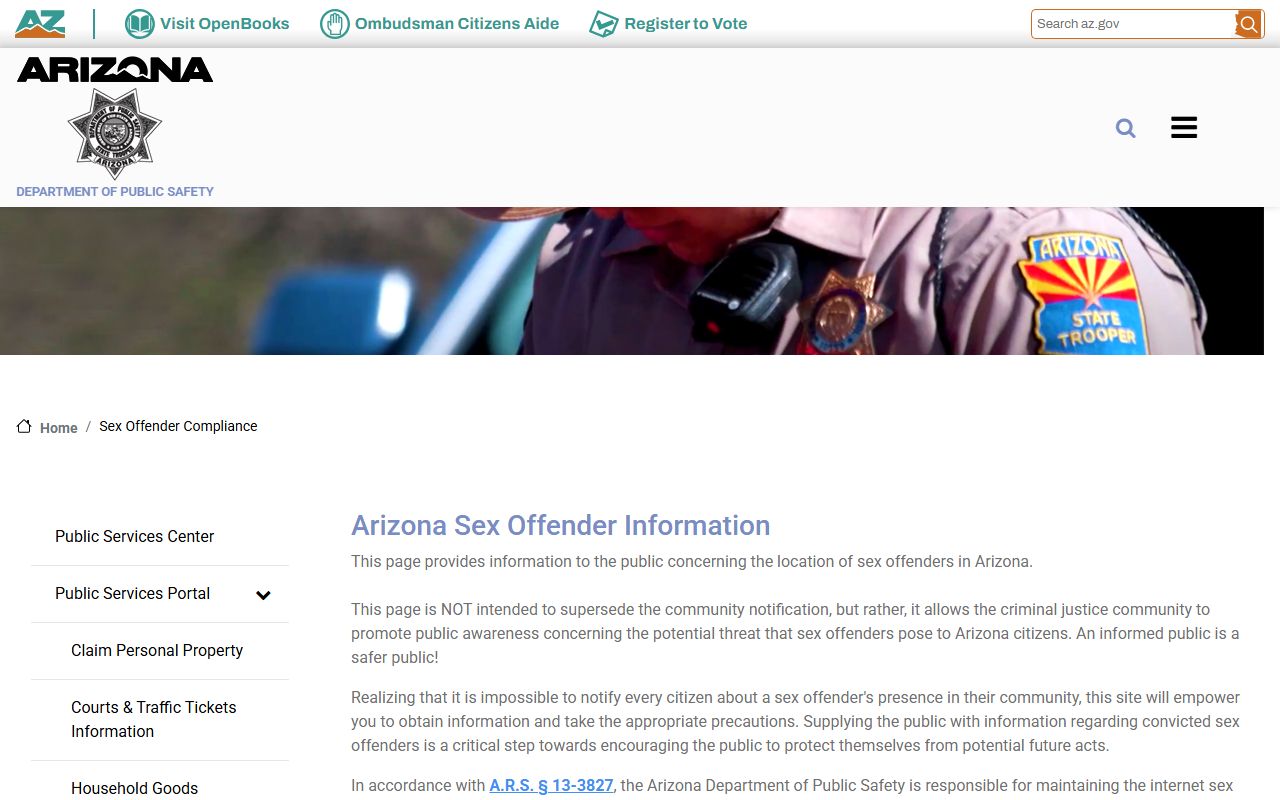
The Arizona Department of Public Safety runs the state sex offender registry. This is the main source for sex offender data in Arizona. DPS collects info from all 15 county sheriffs and puts it in one place. You can search the whole state at once or look at one county at a time.
The Arizona DPS Sex Offender Compliance page gives you access to the public registry and a list you can download. The site shows Level 2 and Level 3 offenders plus those who meet the rules set in state law. You can get this list for free if you use it for safety reasons. If you want it for a business use, you need to call the Public Records Unit at (602) 223-2345 and pay a fee. The DPS main office is at 2222 W. Encanto Blvd. in Phoenix. Their sex offender line is (602) 255-0611.
The data on this page helps people stay safe. It is not meant to scare or harm anyone. Using sex offender info to harass or threaten people is a crime in Arizona.
How to Search Arizona Sex Offenders
You have several ways to look up sex offenders in Arizona. The fastest method is the online search tool. It works from any device with internet access. You can also visit a county sheriff office in person if you need more help or want to see paper files.
The OffenderWatch system powers most sex offender searches in Arizona. To use it, go to your county sheriff website and click the sex offender link. You can search by last name or first name. You can also search by city, zip code, or street address. The results show a photo, the person's address, and their risk level. Some searches also show what crime the person did and when they were convicted. Each county in Arizona links to its own OffenderWatch portal. The state also has a combined search that covers all counties at once.
When you search for Arizona sex offenders, you will need at least one of these:
- First name or last name of the person
- Street address or zip code to search near
- City name in Arizona
- County name for local results
Note: Not all sex offenders show up in public searches since some low-risk offenders are not posted online.
Sex Offender Risk Levels in Arizona
Arizona uses a risk level system to rank sex offenders. The level shows how likely a person is to commit another crime. There are four levels used in the state. Level 0 is for people convicted before June 1, 1996, or for some juvenile offenders. These people must register but do not get community notification. Level 1 is low risk. Notice to the public is up to the sheriff. Level 2 is medium risk. The sheriff must tell people in the area. Level 3 is high risk. The sheriff sends out flyers and may hold public meetings.
The risk level comes from a screening tool. Before a person gets out of jail or prison, staff fill out a form with 19 factors. These factors look at things like past crimes, age, and behavior while locked up. The scores add up to a final risk level. A judge does not set this level. It comes from the screening process done by corrections staff or probation officers in Arizona.
Level 3 offenders in Arizona face strict rules. They cannot live within 1,000 feet of a school or child care center. This rule is set in A.R.S. Section 13-3727. The sheriff makes sure they follow this rule. Violating it can lead to new charges and more prison time.
Arizona Sex Offender Registration Rules
All sex offenders in Arizona must register with the county sheriff where they live. The sheriff keeps the records and sends them to the state. Registration happens in person at the sheriff office. You cannot do it online or by mail. The process takes about 30 minutes and requires a photo and fingerprints.
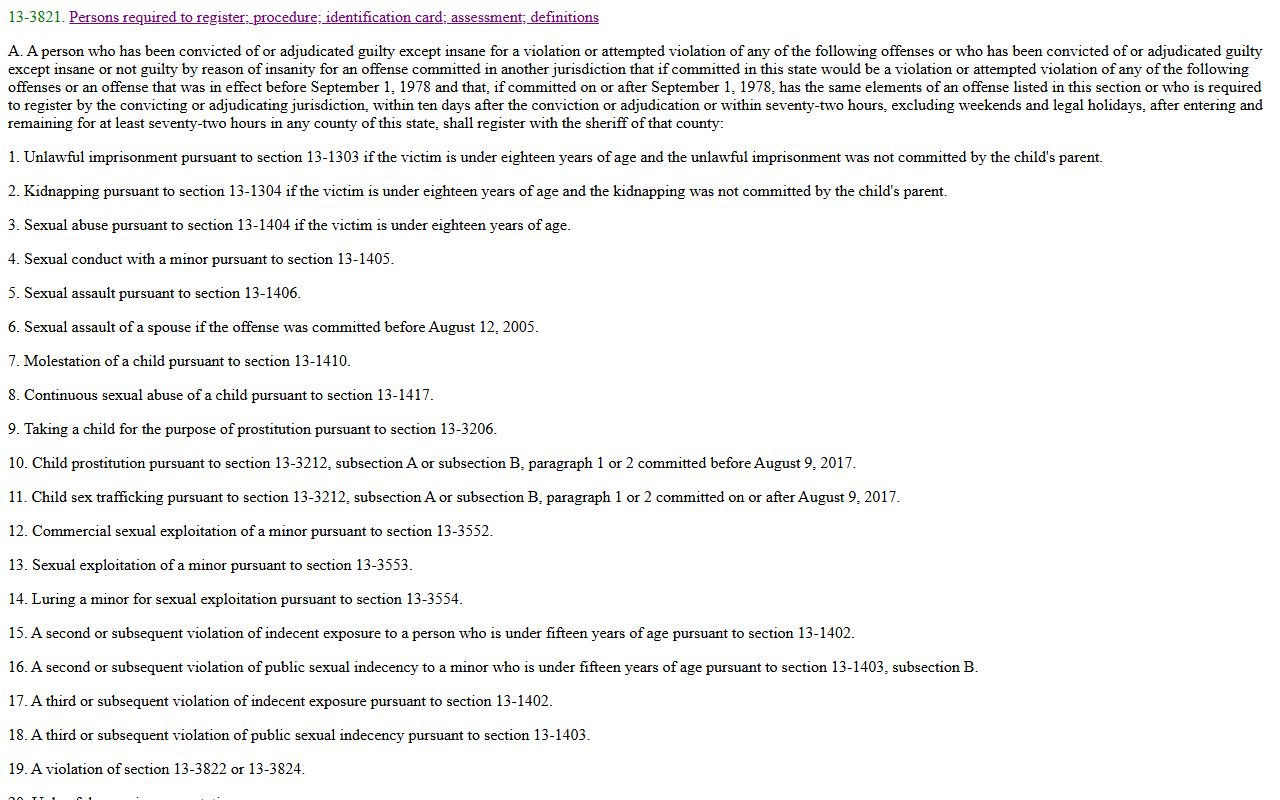
Under A.R.S. Section 13-3821, anyone convicted of a sex crime must register within 10 days of being sentenced or released. This includes people on probation. If you move to Arizona from another state and have to register there, you must sign up here too. You have 72 hours after staying in Arizona for 72 hours to register with the local sheriff. Visitors who stay less than 72 hours do not need to register. But if you stay longer, you must act fast. Missing the deadline is a Class 4 felony in Arizona.
Sex offenders must also get a special credential from the MVD each year. This is not a regular driver license. It looks the same but flags the person as a sex offender when police check it. Failing to get this card is a Class 6 felony with a $250 fine on top of other costs. The annual registration itself also has a $250 assessment fee that goes to the state.
Note: Homeless sex offenders in Arizona must check in every 90 days instead of once a year.
Updating Sex Offender Information in Arizona
Sex offenders must keep their info current. This is not optional. Arizona law requires updates within 72 hours of any change. This rule is in A.R.S. Section 13-3822. The 72 hours do not count weekends or holidays. You must go to the sheriff office in person to make changes. Online updates are not allowed for most items.
Changes that require a new filing include moving to a new address, changing your name, or getting a new job. If you change your online user names or email addresses, you must report those too. Arizona tracks what sex offenders do online. This helps police watch for bad behavior on social media or dating sites. Failure to report any of these changes is a Class 4 felony, the same as not registering at all.
Annual registration happens during your birth month. You go to the sheriff office, confirm your info, take a new photo, and pay the $250 fee. If you miss your birth month, you are out of compliance. The sheriff will issue a warrant for your arrest. Staying current is the only way to avoid new charges in Arizona.
Arizona Sex Offender Management Board
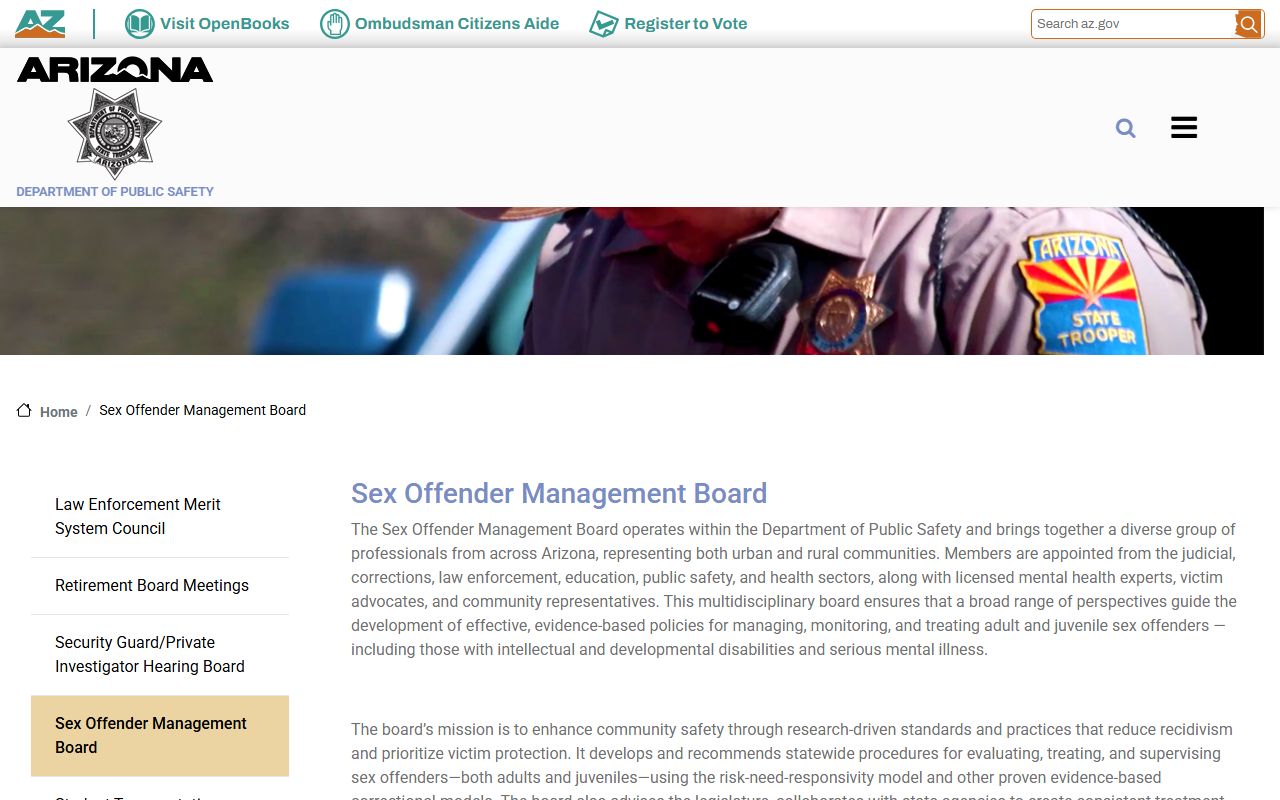
Arizona created a new oversight group in 2024. The Sex Offender Management Board works within the Department of Public Safety. It brings together experts from law enforcement, treatment, and victim services. Governor Katie Hobbs signed Senate Bill 1630 on June 21, 2024, to set up the board.
The board sets standards for how Arizona handles sex offenders. They look at research on what works to stop repeat offenses. They also focus on keeping victims safe. The board meets several times a year and takes public input. You can reach them at (602) 223-2611 or write to SOMB, Arizona DPS, 2222 W. Encanto Boulevard, Phoenix, AZ 85009. The Sex Offender Management Board page on the DPS site has more details about their work and upcoming meetings.
Arizona Sex Offender Laws
State law sets the rules for sex offender registration in Arizona. The main statutes are in Title 13 of the Arizona Revised Statutes. These laws cover who must register, how often, and what happens if they fail to comply. Courts and sheriffs follow these rules exactly.
A.R.S. 13-3821 lists all the crimes that require registration. It also explains the $250 fee and the rules about online identifiers. A.R.S. 13-3822 covers notice of moving and the 72-hour rule. A.R.S. 13-3824 sets the penalties for violations. Failure to register is a Class 4 felony. That can mean years in prison. A.R.S. 13-3825 explains community notification and how sheriffs decide what to tell the public. A.R.S. 13-3827 requires DPS to run the internet registry and keep it up to date.
Community notification started in Arizona on June 1, 1996. Anyone released or sentenced after that date is subject to public notice based on their risk level. People convicted before that date may still face notification if a sheriff does a risk assessment and finds they pose a threat. The law gives sheriffs 45 days after an offender is released to notify the community.
Note: Misusing sex offender data to threaten or harass someone can lead to criminal charges under Arizona law.
Violent Sexual Predators in Arizona
Some sex offenders get a special label in Arizona. A violent sexual predator is someone the state deems too dangerous to release. After they finish their prison term, they can be held at the Arizona State Hospital under civil commitment. This is not a new criminal sentence. It is a civil process to protect the public.
The review happens before an offender's release date. Corrections staff look at their record and behavior. If they meet the violent sexual predator criteria, the state can file to keep them locked up. A judge decides after a hearing. If committed, the person stays at the state hospital until doctors and the court agree they are safe to release. This can be for life in some cases. These people are still on the sex offender registry even while held at the hospital.
National Sex Offender Search Tools
You can also search for sex offenders across state lines. The federal government runs a free tool for this. It pulls data from all 50 states into one search. This helps if you want to check on someone who may have moved from another state to Arizona.
The National Sex Offender Public Website (NSOPW) is run by the U.S. Department of Justice. It links to every state registry, including Arizona. You can search by name or location. The site also has safety tips and resources for parents. It is free to use and works on phones and computers. If an offender in Arizona came from another state, you may find more details about their past crimes through the national search.
Search Arizona Sex Offenders by County
Each county sheriff in Arizona handles sex offender registration for their area. Pick a county below to find local contact info, office hours, and links to county search tools.
Sex Offender Lookup in Arizona Cities
Residents in major cities can check sex offenders in their area through local police or the county sheriff. Select a city below for local resources and search options.